
(2500–2400 BC)
For generations, entire cities have fought over the same strip of land. Between 2500 and 2400 BC, power is no longer born — it is inherited, contested, and sometimes broken. In Mesopotamia, Lagash and Umma wage a Hundred Years' War over the fertile plain of Gu'edena, draining resources and professionalizing violence. In Egypt, the Fifth Dynasty rises under Userkaf, who builds sun temples instead of pyramids and shares power with the clergy of Ra. In Europe, the Bell Beaker culture creates a continent-wide elite network speaking a single language of prestige. And in Syria, Ebla builds the first royal library of the Semitic world. This is not a world expanding — it is a world beginning to break apart.
⚡ Before watching, do you know the answer?
What did Userkaf, first pharaoh of the Fifth Dynasty, build instead of a giant pyramid?
For generations, entire cities have fought over the same strip of land. In Egypt, power no longer grows — it is shared. And in Europe, new elites connect a continent without kings. Between 2500 and 2400 BC, power is no longer born. It is inherited, contested, and sometimes broken. This is the century where the ancient world faces its first systemic crises… and from their cracks, the empires of tomorrow will be born.
On the plain of Gu'edena, the fertile corridor that separates Lagash from Umma, two city-states have fought over the same strip of land throughout this entire century. This is no skirmish. This is the war the Sumerians recorded as the "Hundred Years' War." The reliefs of Eannatum, governor of Lagash, make it clear: he wins, carves a new boundary with stone stelae… and ten years later, it all starts again.
The problem is systemic. There is no supra-city court to arbitrate. Each city is sovereign. Each has its own army and its own irrigation economy. When Umma's canal diverts water from Lagash, the sword decides. And when Lagash wins, Umma waits for its moment. Thus resources are drained, violence professionalized, and political propaganda invented: victories carved in stone so that no one forgets who is in charge. From this endless cycle, no victor will emerge. Only exhaustion. And into that demographic and economic hole, new actors will slip.
After Khufu and Khafre, the Egyptian state hit its spending ceiling. Userkaf, first pharaoh of the Fifth Dynasty, does not try to surpass them. He changes tactics. He orders the construction of sun temples at Abu Sir and funds the clergy of the god Ra, who begin to challenge the crown for influence. The pharaoh is no longer the only living god. Now he must negotiate with the holy city of Heliopolis. The expeditions to Punt — the mythical land of incense and myrrh — are political theater. They demonstrate that the pharaoh can still reach the ends of the earth. Meanwhile, in the provinces — the nomes — the nomarchs inherit their positions, and dynasties of scribes manage the granaries. Bureaucracy becomes nobility, and nobility becomes indispensable. The lesson is clear: when power cannot grow, it must be shared.
Enjoying our content? Support us on Ko-fi

Your support helps us continue creating quality historical content
In Western Europe, the Bell Beaker culture continues to expand and shape elements that became indispensable: bell-beaker pots, copper daggers, and archer's wristguards. A prestige kit that appears from the Iberian Peninsula to Eastern Europe, speaking a single language — the language of the elite. This is not about invasions. It is about networks. At Los Millares, in the south of the Iberian Peninsula, copper production remains centralized and fortified. In Troy, in Anatolia, workshops accumulate gold and a pale yellow metal that shines like the sun — a natural alloy of gold and silver. Whoever controls the metal controls the conversation. For the first time, Europe has a common language of power that needs no kings — only connections.
Meanwhile, at Stonehenge, the first bluestones are brought from the mountains of Wales — 80 stones transported over routes that require boats, leaders, and negotiation. They are not giants. They are mobile symbols of a connected world.
From the terrace of a settlement in northern China belonging to the Longshan culture, the evening sky is read like a book. 360-day calendars allow them to predict river floods and coordinate planting. Whoever controls the calendar controls communal labor, and therefore, life. The rammed earth walls surrounding these villages indicate that conflict has become a political reality. Tombs with jade objects, and tombs without them, show that inequality has become visible. Divination using turtle shells is beginning to shift from being an exclusive tool of the elite to a public service — elders consult the oracle before making decisions. Power is not imposed. It is interpreted. And the correct interpretation is the one that aligns humanity with the heavens. That will be the seed of the future Mandate of Heaven.
In northern Syria, the palace of Ebla stores thousands of tablets — the first royal library of the Semitic world, documenting trade, diplomacy, and administration.
In Anatolia, centers like Troy and Alaca Höyük concentrate precious metals, becoming hubs for the redistribution of wealth toward Mesopotamia.
In Mesoamerica, the domestication of maize reaches high-yield varieties that will enable the first complex chiefdoms in the region.

c. 2460 BC • Limestone • Girsu, Mesopotamia
Eannatum's victory over Umma carved in stone. The birth of political propaganda.
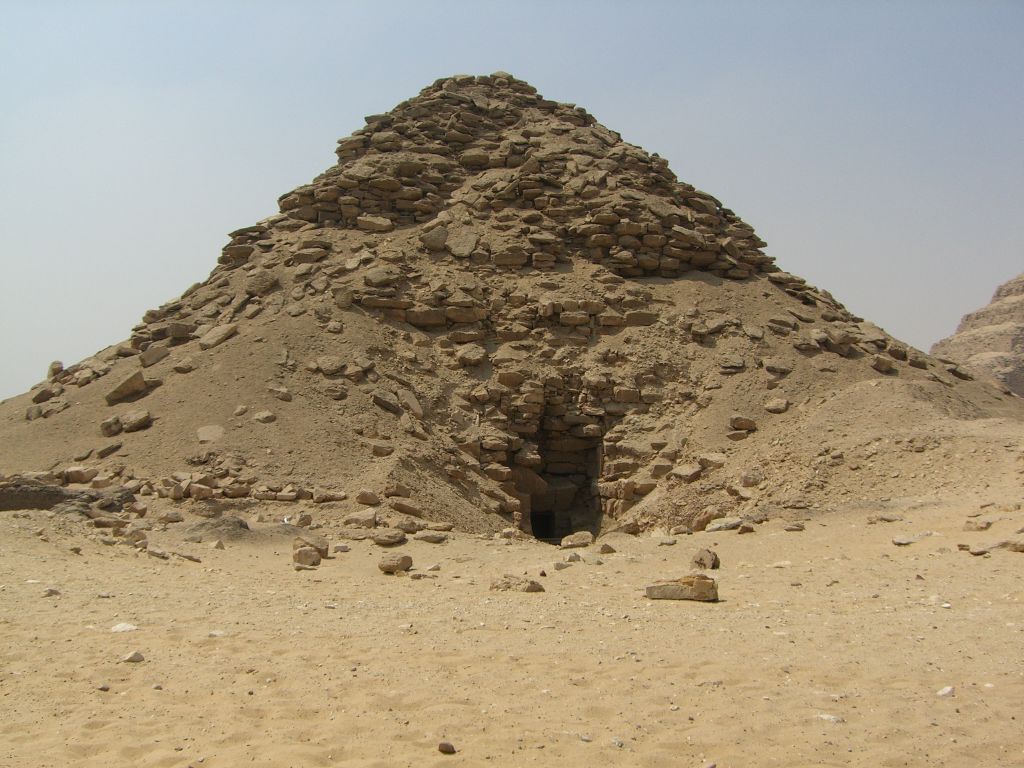
c. 2490 BC • Limestone • Saqqara, Egypt
Modest compared to Giza — a pharaoh who chose to share power rather than build monuments to himself.

c. 2400 BC • Ceramic, copper • Europe
A shared elite language from Portugal to Poland — pots, daggers, and wristguards.

c. 2400 BC • Clay • Ebla, Syria
Part of the first royal library of the Semitic world — thousands of tablets documenting a thriving trade empire.
Enjoying our content? Support us on Ko-fi
Your support helps us continue creating quality historical content
Mesopotamia: Lagash and Umma begin their century-long conflict over the Gu'edena plain. Eannatum of Lagash commissions the Stele of the Vultures. Akkadian-speaking communities gain influence in northern cities.
Egypt: Userkaf founds the Fifth Dynasty. Sun temples rise at Abu Sir. The clergy of Ra at Heliopolis begins to share power with the throne.
Europe: Bell Beaker prestige networks span the continent. First bluestones arrive at Stonehenge from Wales. Syria: The palace of Ebla stores thousands of administrative tablets.
East Asia: Longshan settlements develop rammed earth walls and turtle-shell divination. Anatolia: Troy accumulates gold and electrum, becoming a hub for metal redistribution.
Enjoying our content? Support us on Ko-fi
Your support helps us continue creating quality historical content
Between 2500 and 2400 BC, power stops being a miracle and becomes an engineering problem. The city-states discover their limits: they cannot grow without destroying each other. The response is threefold: professionalize war — standing armies. Control information — temple-archives like the one at Nippur. Export the crisis — trade networks that shift conflict to distant routes. Egypt learns to share privileges. Europe learns to share symbols. Asia learns to share calendars. They all share one thing: the need for power to survive its own mistakes. This is not the birth of the perfect state. It is the birth of the state that adapts — and therefore, can endure for centuries.
Enjoying our content? Support us on Ko-fi
Your support helps us continue creating quality historical content
The conflict between Lagash and Umma is not a war in the modern sense. It is a structural condition. Two sovereign cities, each with its own irrigation economy, competing for the same water. No higher authority to arbitrate. No mechanism for lasting peace. Every treaty is a truce, every truce an interlude before the next round. This is the first documented case of what we would today call a resource war — and the strategies developed here (propaganda stelae, border markers, divine justification for victory) will be refined by every empire that follows.
Userkaf's decision to build a modest pyramid and fund sun temples instead is one of the most consequential political choices of the ancient world. It marks the moment when the Egyptian monarchy recognized that power cannot grow indefinitely. By sharing authority with the clergy of Ra, Userkaf bought stability — but at a price. Every concession is a rung that others can climb. From this will emerge the viziers, the priests, and later, the governors who will challenge the throne itself. The Fifth Dynasty did not fall. It adapted. And in doing so, it taught every future dynasty how to survive.
Answer these three questions about 2500-2400 BC:
1️⃣ What caused the Hundred Years' War between Lagash and Umma?
2️⃣ What did Userkaf, first pharaoh of the Fifth Dynasty, build instead of a giant pyramid?
3️⃣ What made the Bell Beaker culture unique in prehistoric Europe?
 Subscribe